
Table of Contents
- Why Beginners Need DareBee Alternatives
- Quick Comparison: Top DareBee Alternatives for Beginners
- Best Free Workout Apps for Beginners
- How to Start a Home Workout Routine That Sticks
- Calisthenics Programs for Beginners
- Time-Efficient Alternatives for Busy Professionals
- Which Alternative Should You Choose?
- Conclusion
Last Updated: August 9, 2026
Why Beginners Need DareBee Alternatives
Finding the right workout app when starting your fitness journey can feel overwhelming. DareBee has built a loyal following, but it's far from the only option, and for many beginners, it's not the best fit. The real question isn't whether alternatives exist; it's which one matches your goals, schedule, and learning style.
Most beginners stumble not because they lack motivation, but because they pick a tool misaligned with their actual life. A rigid program defeats someone needing flexibility. A strength-only app frustrates someone craving variety. An unaffordable subscription becomes guilt rather than progress.
The alternatives we'll cover address specific gaps. Some offer superior progression systems for building strength without equipment. Others deliver community accountability. A few combine workouts with nutrition and mindfulness, addressing the whole picture. Below, we'll show you how to evaluate each option and match it to your situation.
Quick Comparison: Top DareBee Alternatives for Beginners
Comparison Table
| App | Starting Price | Best For | Free Tier | Key Strength |
|---|---|---|---|---|
| MyBetterCore | A$79.99 (All In One Bundle) | Sustainable habit building + strength | No | Holistic approach, no overwhelm |
| Nike Training Club | Free | Diverse workouts, all fitness levels | Full app free | Massive library, motivational features |
| Jefit | Free | Strength training, progress tracking | Comprehensive | Exercise database + detailed logging |
| Fitbod | A$15.99/month | Personalised strength training | 3 free workouts | AI-powered workout generation |
| Sweat | A$24.99/month | Structured programs, community | 7-day free trial | Progressive training plans |
| Centr | A$29.99/month | Holistic wellness (fitness + nutrition + mindfulness) | 7-day free trial | All-in-one platform |
| Apple Fitness+ | A$14.99/month | Apple ecosystem users | No | Studio-quality instruction |
| Les Mills+ | A$19.99/month | Group fitness class experience | 30-day free trial | Energetic, music-driven classes |
| Peloton App | A$16.99/month | Motivating instructors, diverse classes | Limited free access | Engaging, community-driven |
| Alo Moves | A$20/month | Yoga, Pilates, mindfulness | 14-day free trial | Comprehensive mind-body focus |
Best Free Workout Apps for Beginners
Nike Training Club: Diverse, Motivating, Completely Free
Nike Training Club delivers genuine value without requiring payment. The app houses an extensive library spanning strength, cardio, yoga, and mobility, all accessible to beginners at no cost. The workouts scale intelligently, a beginner bodyweight routine is genuinely designed for someone building foundational strength, not watered down.

Virtual badges and achievement celebrations acknowledge real progress without feeling gimmicky. Integration with Apple Health creates a unified view of your fitness rather than treating the app as isolated.
One limitation: the app leans heavily into Nike branding. For beginners who need variety, zero financial commitment, and a solid foundation before investing elsewhere, NTC is genuinely difficult to beat.
Jefit: Strength Training Without the Price Tag
Jefit approaches strength training by providing tools: over 1,300 exercises with video demonstrations, custom workout builders, and detailed progress tracking. This matters because beginners often don't know what exercises exist or how to log properly.
The free version is substantial. You get the complete exercise library, custom routine creation, and tracking of weights, sets, and reps. The interface can feel dense initially, but it scales as you progress. Logging your work and watching numbers climb week to week builds confidence. For beginners focused on strength training without equipment, Jefit's free tier removes a major barrier.
Sweat and Centr: Free Trials to Test Before Committing
Both Sweat and Centr offer structured entry points for beginners uncertain about paid subscriptions. Sweat's approach centers on progressive programming, workouts designed to build on each other over weeks. Centr takes the broader wellness angle: workouts, meal plans, meditation, and sleep guidance.
Both offer 7-day free trials, letting you test whether the approach resonates with your actual schedule and preferences before committing financially.
How to Start a Home Workout Routine That Sticks
Choose Your Foundation: Bodyweight or Minimal Equipment
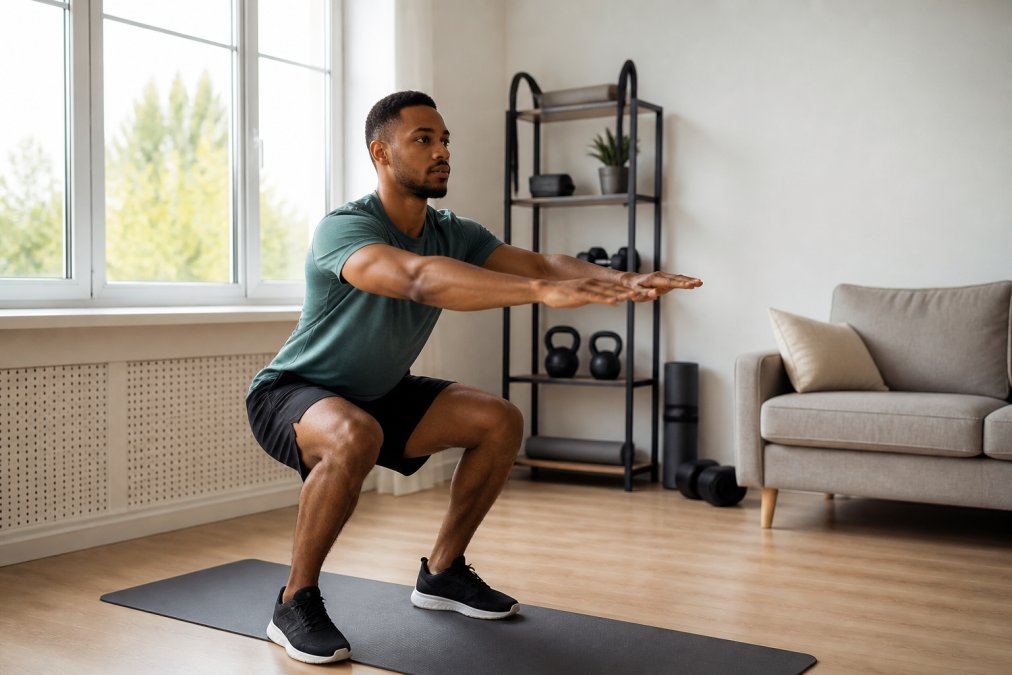
The first decision isn't which app to use; it's what you're working with physically. Bodyweight-only training has a genuine advantage for beginners: zero setup friction. You don't need to clear space, assemble equipment, or wait for deliveries.
Minimal equipment, a single dumbbell, resistance band, or water jug, opens more exercise options and accelerates strength gains. The choice depends on your living situation and honesty about yourself. If setup friction will cause you to skip workouts, bodyweight is smarter. If you have space and can keep equipment accessible, minimal equipment often delivers faster progress.
Most beginner apps support both approaches. Nike Training Club and Jefit let you filter by equipment required or bodyweight only.
Start Small and Build Progressive Overload
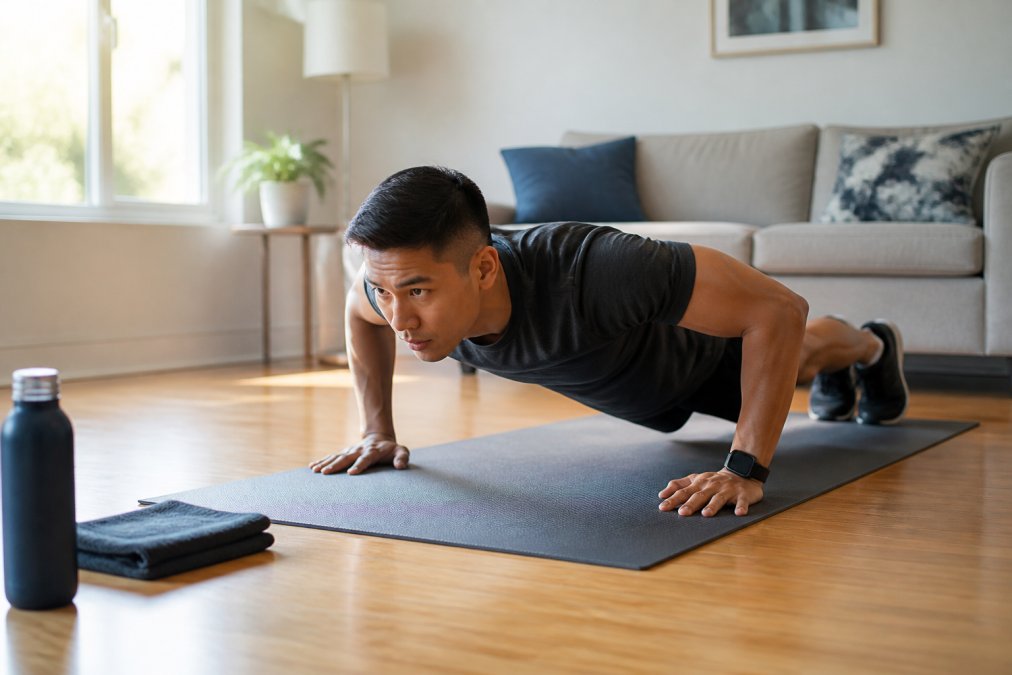
The biggest beginner mistake is treating Week One like Week Twelve. Jumping into advanced routines, high volume, or complex movements creates soreness, injury risk, and burnout. Starting small is strategy, not weakness.
Progressive overload, gradually increasing difficulty, prevents plateaus while building sustainable habits. Start with fewer sets and reps, then add volume over weeks. Or keep volume constant while improving form. Apps like Fitbod automate this; Jefit forces you to log it and see it happen.
A practical starting point: three workouts per week, 20-30 minutes each. This builds habit without overwhelming your schedule. Most beginners who fail quit because they tried too much too soon.
Track Progress and Stay Accountable
Logging workouts creates visibility and psychological commitment. You see patterns: which days you complete sessions, which exercises feel strongest, where you've improved. Filling in the log creates a moment of intention and reflection.
Apps like Jefit, Fitbod, and Nike Training Club make logging frictionless. Accountability also means telling someone, a partner, friend, or online community. When you feel supported rather than judged, consistency becomes easier.
Calisthenics Programs for Beginners
What Calisthenics Offers Beginners
Calisthenics, training using your bodyweight and gravity, appeals to beginners because it's accessible, scalable, and builds functional strength that transfers to real life. The progression is intuitive: you improve form, increase reps, or move to harder variations. There's always a next step.
Calisthenics also builds body awareness. You learn how your body moves, where you're strong, where you're limited. This foundation matters more than most beginners realise.
Apps That Excel at Bodyweight Training
Jefit's exercise library includes extensive calisthenics progressions. Nike Training Club's bodyweight-only filters surface solid calisthenics workouts. MyBetterCore's Functional Strength for Longevity guide specifically addresses home workout training without a gym, built around sustainable progression and real-world movement.

Fitbod generates personalised calisthenics workouts based on your logged progress, preventing the common beginner mistake of doing the same routine for months without progressing.
Time-Efficient Alternatives for Busy Professionals
Busy professionals often frame fitness as either-or: commit to an hour daily or don't bother. The reality is that 15-20 minutes of focused training, done consistently, outperforms sporadic hour-long sessions.
Apps designed around time efficiency acknowledge this. Les Mills+ offers 15-55 minute options. Peloton App includes 10-minute strength segments. Nike Training Club is filterable by duration. Consistency matters more than intensity for beginners.
MyBetterCore addresses this through its All In One Bundle, emphasising sustainable habits built into existing routines rather than requiring wholesale schedule restructuring. For professionals struggling to add fitness without overwhelm, this approach often proves more sustainable.
Which Alternative Should You Choose?
For Maximum Flexibility and Zero Cost
Nike Training Club is the clear choice. You get a genuine library, diverse workout types, and zero financial commitment. Jefit ranks second, with a substantial free tier and clear strength focus.
For Personalised Strength Training
Fitbod stands out because it generates workouts specifically for you based on what you've logged. The AI suggests appropriate progressions, prevents overuse injuries, and keeps you from repeating routines endlessly. The trade-off is cost (A$15.99/month) and consistent logging.
For Holistic Wellness and Habit Building
Centr offers a complete platform: workouts, meal plans, meditation, sleep guidance. MyBetterCore takes a different approach, focusing on sustainable habit building rather than offering everything. The All In One Bundle (A$79.99) combines guides on functional strength, habit mastery, and wellness into a system designed for people who've failed at fitness before and need simplicity.
Conclusion
Finding the right workout alternative to DareBee isn't about picking the objectively "best" app. It's about matching your actual situation, your schedule, goals, history with fitness, learning style, to a tool that supports rather than frustrates you.
If you've tried fitness programs before and quit, the problem probably wasn't you. It was misalignment between the program and your real life. MyBetterCore addresses this directly through its focus on sustainable habit building and simplified systems that fit into busy schedules. The All In One Bundle (A$79.99) combines functional strength training, habit mastery, and wellness guidance into a coherent system designed for people who need simplicity and support, not complexity and overwhelm. Start with it, and you'll build the consistency that makes everything else, strength gains, confidence, energy, actually stick.

Frequently Asked Questions
Is DareBee actually good for absolute beginners?
DareBee offers free, no-equipment workouts that appeal to beginners, but it lacks personalisation and structured progression. Many beginners find alternatives like Nike Training Club or MyBetterCore's Functional Strength guide more beginner-friendly because they provide clearer progressions, better form guidance, and easier-to-follow routines. DareBee's strength lies in its community and challenge structure, which works well once you've built foundational fitness.
What are the best free workout apps available in Australia?
Nike Training Club, Jefit, and the free tiers of Sweat and Centr are excellent Australian options. Nike Training Club is completely free with diverse workouts and motivational badges. Jefit excels for strength training tracking with over 1,300 exercises. Sweat and Centr offer free trials (7 days for Centr, free access for Sweat's basic tier) so you can test before subscribing. All support bodyweight and minimal-equipment training.
How do I choose a home workout program that I will actually stick to?
Start by matching the program to your schedule: apps like Peloton and Apple Fitness+ offer 5-15 minute sessions for busy professionals, while others require 30-45 minutes. Choose based on your preference: if you enjoy community and challenges, try Nike Training Club; for strength focus, use Fitbod or Jefit; for holistic wellness, consider Centr or MyBetterCore's Mind and Body Wellness Bundle. Test free trials first, then commit to one for 4 weeks to build the habit.
Do I need gym equipment for these DareBee alternatives?
No. Most alternatives prioritise bodyweight and no-equipment training. Nike Training Club, Peloton App, and LES MILLS+ all offer full bodyweight options. Fitbod and Jefit let you specify 'no equipment' when creating workouts. For calisthenics specifically, apps like MyBetterCore's Functional Strength For Longevity guide focus entirely on bodyweight movements. Some apps offer equipment options, but they're never required for beginners.
What is the best calisthenics program for beginners?
MyBetterCore's Functional Strength For Longevity ($17.99) is specifically designed for beginners with no equipment required. Nike Training Club's free bodyweight strength workouts are also excellent for learning proper calisthenics form. Jefit's free version includes pre-built calisthenics routines with video demonstrations. These prioritise progressive overload, meaning you increase difficulty gradually through more reps, longer holds, or harder variations, which prevents injury and builds sustainable strength.
This article was written using GrandRanker